
Standing water that does not clear
Puddles that remain a day or two after rain suggest poor falls or a blocked outlet. Over time, ponding speeds up wear on the covering.
Flat roofing
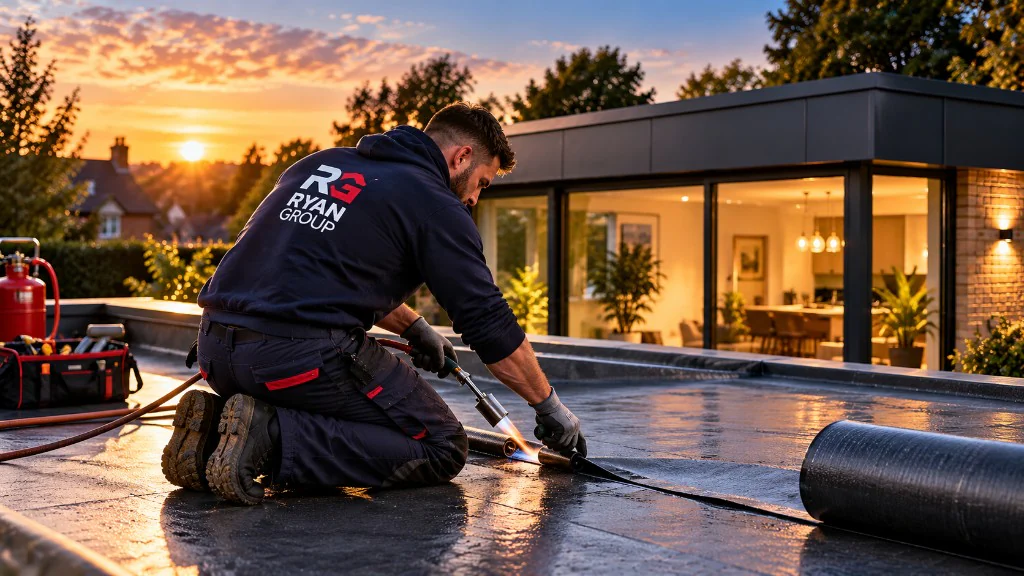
Flat roofs are common on extensions, garages, porches, dormers and commercial buildings. They are not truly flat, because they need a slight fall so water can run off, and when that drainage fails, water can pond, stress the covering and find its way inside.
What we can help with
Whether you have a recurring leak, a split membrane or a roof that has simply reached the end of its useful life, we can help you understand the options and the likely next steps.
Know what to look for
Puddles that remain a day or two after rain suggest poor falls or a blocked outlet. Over time, ponding speeds up wear on the covering.
Raised bubbles, hairline cracks or open seams let moisture reach the deck below. Edges and joints are common weak points.
Water can travel along the deck before it appears inside, so the stain on a ceiling is often some distance from the actual failure.
A spongy feel underfoot or dark staining in the roof void can mean moisture has been getting in for some time and the deck may need replacing.
Practical guidance
How it works
Tell us where the roof is, roughly how large it is, what it is covered with if you know, and where water is coming in.
Flat roof leaks are often found some distance from where they show, so the assessment considers the covering, edges, outlets and deck.
You are given the realistic options in writing, including what a repair can and cannot achieve, so you can decide with the full picture.
The work is completed, falls and outlets are checked and the roof is cleared of debris.
Quick enquiry
A few details are enough to get started. Tell us what is wrong and where. A call is not a booking.
Questions
Localised damage such as a split, failed joint or damaged upstand can often be repaired. If the covering is widely cracked, the deck is wet or the roof has repeatedly failed, replacement is usually the more sensible long-term option.
There is no single best choice. It depends on the size and shape of the roof, how it is used, access, budget and the details around edges and penetrations. A good installer should explain why they recommend a particular system for your roof.
Like-for-like replacement rarely needs planning permission, but Building Regulations can apply, especially to insulation. Listed buildings and conservation areas have extra rules. Check with your local authority if unsure.
Commercial enquiries are welcome. Please include access arrangements, approximate area and whether the building remains in use so the work can be planned sensibly.
Related services
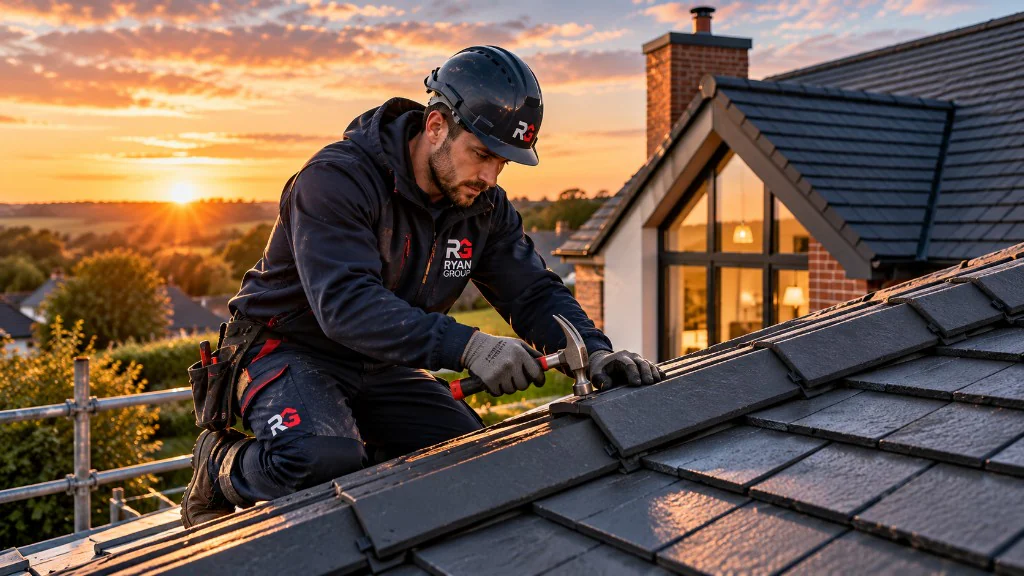
Leak repairs, slipped tiles, ridge and flashing work, and re-roofing for pitched roofs.
View service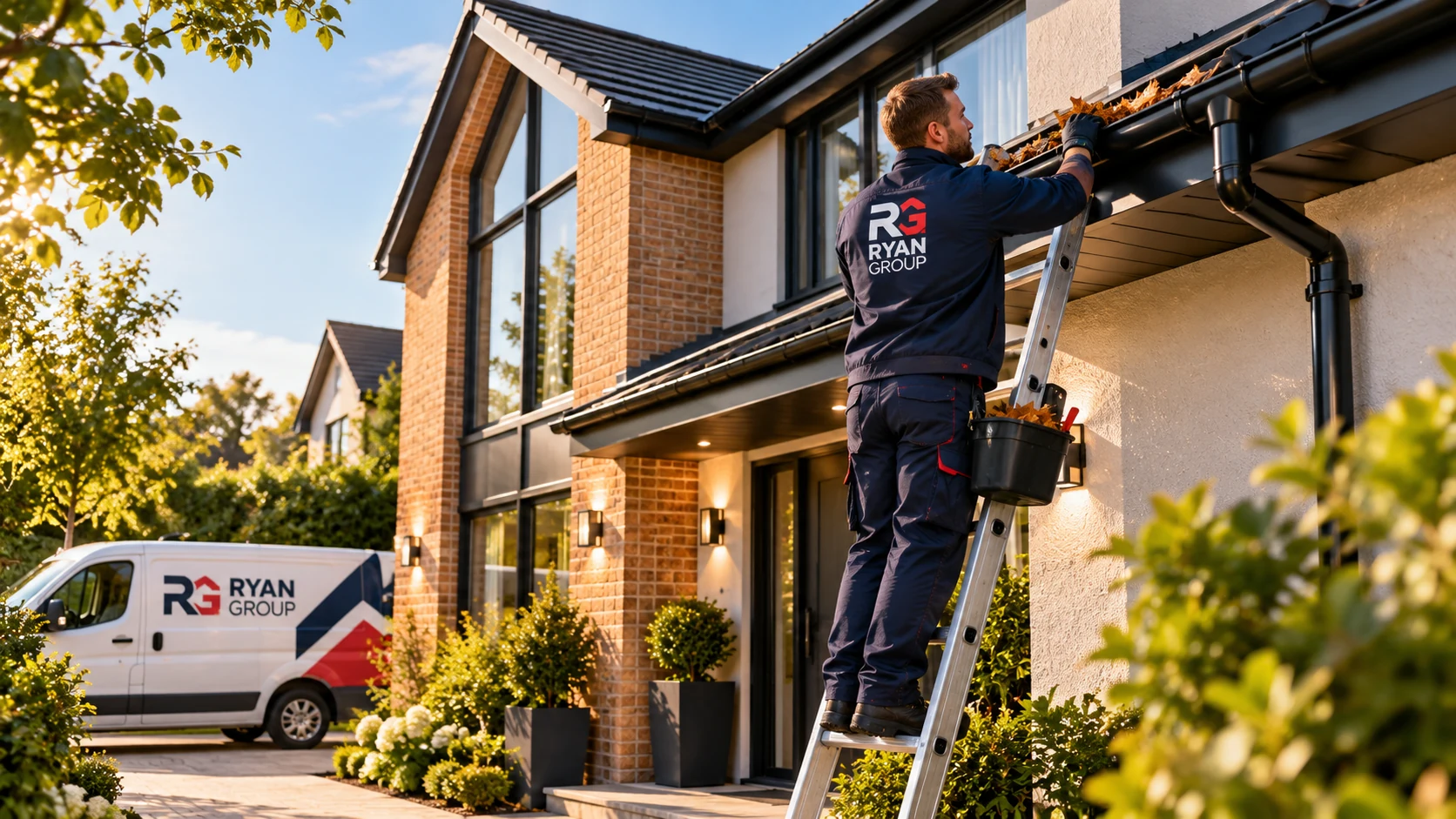
General repairs, snagging, planned maintenance and reactive repairs for homes, landlords and commercial premises.
View service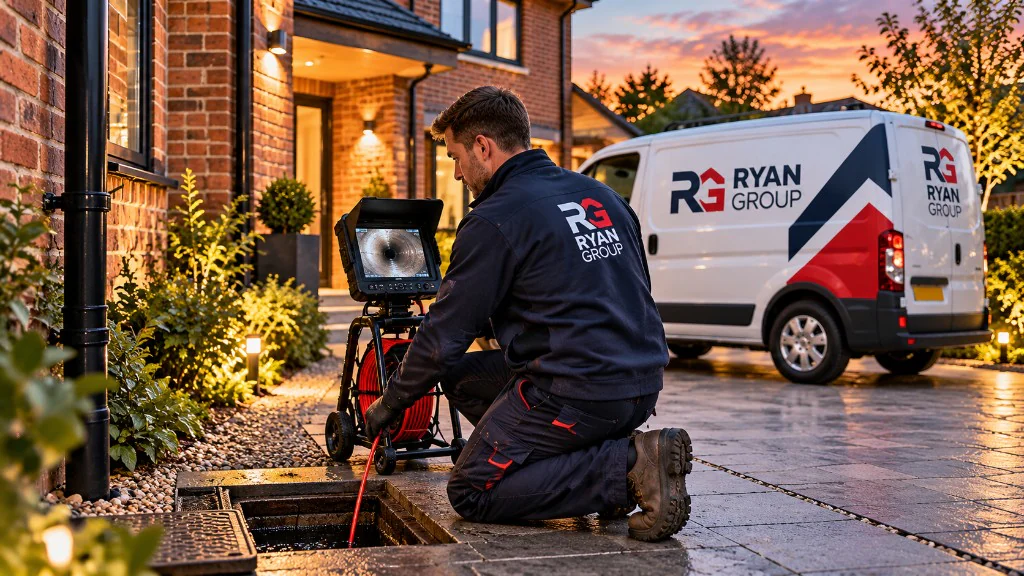
Blocked drains, slow sinks, recurring blockages, gullies and damaged drain pipes.
View serviceBrowse all 12 services on the homepage.